
A fire can leave a house standing but uninhabitable. Even when the flames never reached the living room, smoke, water from firefighting, or damaged wiring may make the property unsuitable for ordinary buyers. In Paradise, the decision to sell can also involve unfinished rebuilding work, septic records, and an insurance claim that has not been settled.
You do not necessarily have to restore the house before putting it on the market. However, a sale needs to account for the property’s condition, local transfer clearances, outstanding debt, and any insurance benefits you might lose by selling too soon.
This guide explains how to evaluate those decisions and what to prepare before selling a fire-damaged property in Paradise, California.
Can You Sell a Fire-Damaged House As-Is in Paradise?
Yes. A house with fire damage can generally be sold in its present condition if you have authority to transfer ownership, meet applicable disclosure and local clearance requirements, and resolve any title or financing obstacles.
The buyer does not necessarily need to receive a fully restored house. Some buyers purchase properties that require extensive rehabilitation, while others consider parcels where a damaged structure must be removed. What matters is that the contract accurately describes the property and assigns responsibility for the outstanding work.
An as-is agreement does not authorize unsafe entry, eliminate known defects from disclosure documents, or override a municipal order. If the building has been declared unsafe, ask the town which restrictions and corrective measures apply before arranging any inspection.
Butte Home Buyers can discuss direct purchase options for qualifying damaged properties. Before deciding, establish whether selling would affect your insurance recovery or leave you responsible for additional costs.
Identify the Damage Before You Decide What to Sell
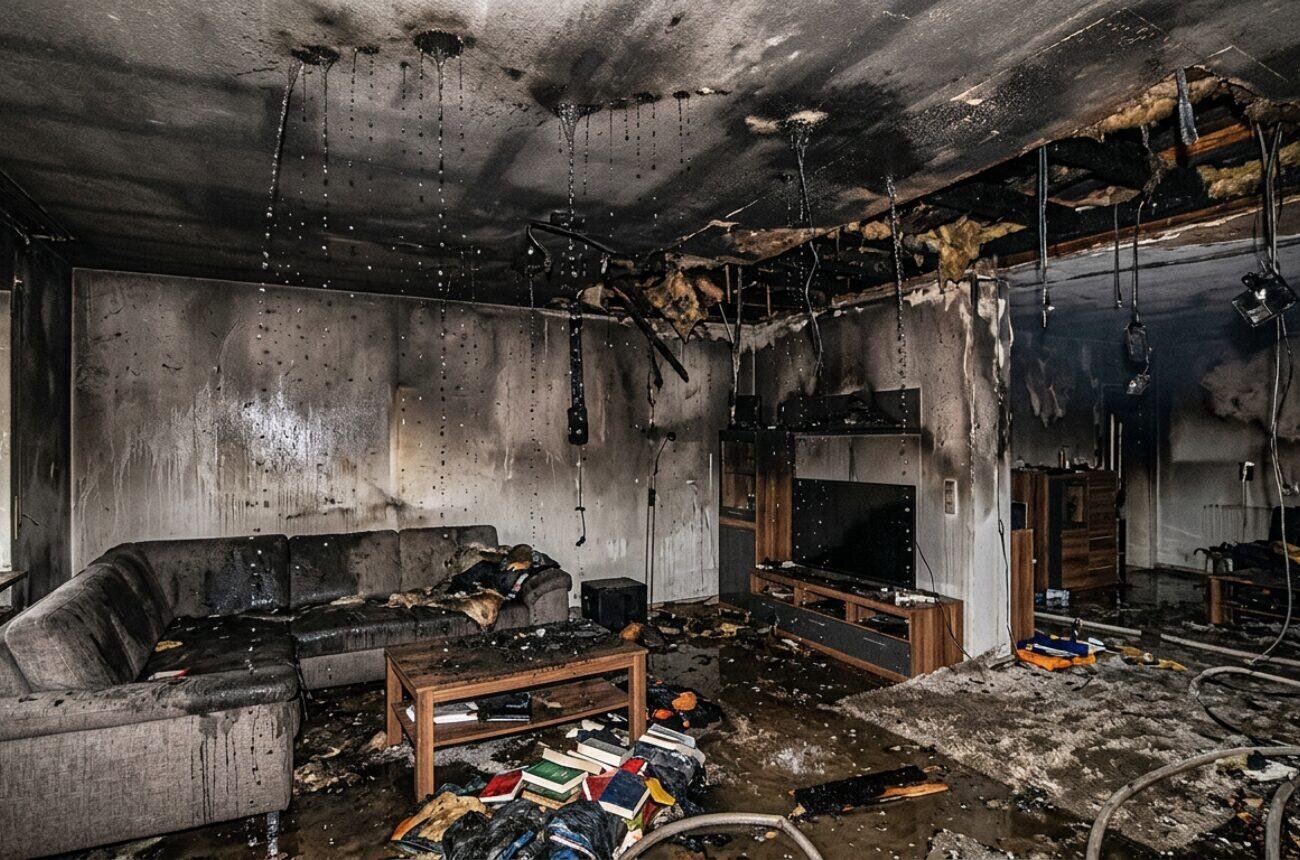
Two houses affected by the same fire may have entirely different rehabilitation costs. A useful assessment separates damage to the dwelling from damage to the land and supporting infrastructure.
| Type of damage | What needs investigation |
|---|---|
| Smoke and soot | Residue inside walls, ventilation systems and other concealed areas |
| Structural fire damage | Roof framing, load-bearing walls, foundation and floor systems |
| Firefighting water damage | Moisture trapped in insulation, flooring and wall cavities |
| Electrical damage | Service panel, circuits and wiring exposed to heat or water |
| Total structural loss | Demolition, debris clearance and future buildability |
| Site damage | Trees, drainage, septic system, water supply and access |
A house that looks relatively intact from the road may still require substantial remediation. Conversely, visible soot alone does not establish that a structure is beyond repair.
Do not enter a restricted building to photograph damage or retrieve belongings. Follow the instructions of local safety officials and arrange qualified inspections. The California Department of Insurance’s residential property claims guide also explains how to document a loss and prevent further damage without endangering yourself.
Understand Your Insurance Claim Before Accepting an Offer
The property and the insurance claim are related, but they are not the same asset. Selling the real estate does not automatically settle the claim, transfer every insurance benefit to the buyer, or establish your right to retain all payments.
Ask your insurer for a written statement identifying what has been paid, what remains outstanding, and what conditions you must satisfy for additional benefits. Have your attorney review any contract language assigning claim rights or requiring you to release the insurer.
Actual Cash Value vs. Replacement Cost
A replacement cost policy may provide benefits beyond the initial actual cash value payment when eligible repairs or replacement are completed. The amount and timing depend on the policy, the loss, applicable California law, and supporting documentation.
Actual cash value and replacement cost are not interchangeable. The insurer’s calculation of building damage also does not necessarily represent the market value of the damaged real estate, which includes land and other features.
If you accept a cash offer before confirming the remaining insurance conditions, you could make a decision based on money that will never become available to you. Separate payments for the dwelling, contents and temporary housing in your records; each coverage may carry different conditions.
Review the California homeowners insurance guide to understand the coverage categories in your own policy.
Can You Move Somewhere Else Instead of Rebuilding?
Under California Insurance Code Section 2051.5, qualifying total-loss claims cannot be denied otherwise covered replacement cost benefits solely because the policyholder chooses to rebuild elsewhere or purchase an existing home at another location. Applicable coverage limits and other requirements still matter.
That protection can be significant for Paradise residents who want to relocate instead of managing another construction project on the original parcel. It does not mean you can automatically collect the full replacement cost by selling the land and taking no further action.
The Department of Insurance’s wildfire claims tips explain replacement options and provide consumer assistance resources. Confirm which version of the law applies to your policy and loss date, along with any deadlines for completing replacement or requesting an extension.
What If You Are Receiving Temporary Housing Benefits?
Additional living expense coverage may reimburse qualifying extra costs while your insured home cannot be occupied. Selling or changing your long-term housing plans could affect future benefits.
Ask the adjuster how the proposed sale and your replacement housing decision would affect eligibility. Do not include temporary housing reimbursements in your estimated sale proceeds as if they were unrestricted cash.
Selling When You Still Have a Mortgage
A fire does not cancel your mortgage. Depending on the loan documents, the lender may have rights to insurance funds associated with the building.
An insurance check may name both the borrower and mortgage company. The servicer can hold those funds while repairs proceed or handle them under other authorized arrangements. Before signing a purchase agreement, request written instructions for a sale rather than a restoration.
You need answers to three questions: What is the current loan payoff? How much insurance money is being held? Will any of that money be applied to the loan, released to you, or restricted for another purpose?
Have escrow reconcile these amounts. If the lender applies an insurance payment to the principal, request a new payoff figure so you do not deduct the same debt twice.
If unpaid property taxes have also accumulated, review our guide to selling a house with back property taxes in Butte County. A fire-related insurance claim does not automatically resolve delinquent taxes or stop a scheduled tax sale.
Paradise Title Transfer Clearances You Cannot Ignore
This is one of the most important differences between selling a damaged property in Paradise and selling a similar house in another California community.
The town requires specified clearances before ownership changes. Establish which ones apply to your parcel early, particularly if a fire destroyed only part of a building or left an abandoned septic system behind.
Defensible Space Clearance for Vacant and Improved Parcels
Paradise Municipal Code Section 8.58.060 requires the town’s compliance certificate before a covered ownership transfer. The rule applies to vacant lots as well as parcels with homes.
The Town of Paradise defensible space clearance application explains the process. Apply separately for each assessor’s parcel number. Outstanding municipal fines or fees and an unsuccessful inspection can prevent issuance. The certificate is valid for 90 days following a passing inspection under the town’s published procedure.
This requirement is not the same as restoring the fire-damaged dwelling. Even if you plan to sell without rebuilding, necessary vegetation or hazardous fuel work may still be required before transfer.
Septic Clearance for a Property With a Standing Home
The town generally requires an onsite wastewater clearance in addition to defensible space approval for parcels with standing homes. Under Municipal Code Section 13.04.090, the septic evaluation used for the clearance generally needs to be within 12 months of escrow closing.
A passing evaluation alone is not the town’s permission to record the transfer. If the system fails, ask about a conditional clearance and its specific requirements. Do not assume that a buyer’s willingness to repair the system makes approval automatic.
Start with the town’s building department or the official permitting portal. For questions about building or wastewater requirements, call the Building Resiliency Center at (530) 872-6291, extension 411.
Selling a Partially Burned House vs. a Vacant Fire-Affected Lot
If the Structure Is Still Standing
Obtain the town’s building status, any unsafe occupancy notices, and available repair reports. If the roof, framing, or utility systems were compromised, have a qualified professional determine whether rehabilitation is feasible.
A buyer may want to preserve an existing structure, but that choice depends on its actual condition and permitting requirements. Unfinished permits should be identified in the contract, rather than represented as completed construction.
If the House Was Completely Destroyed
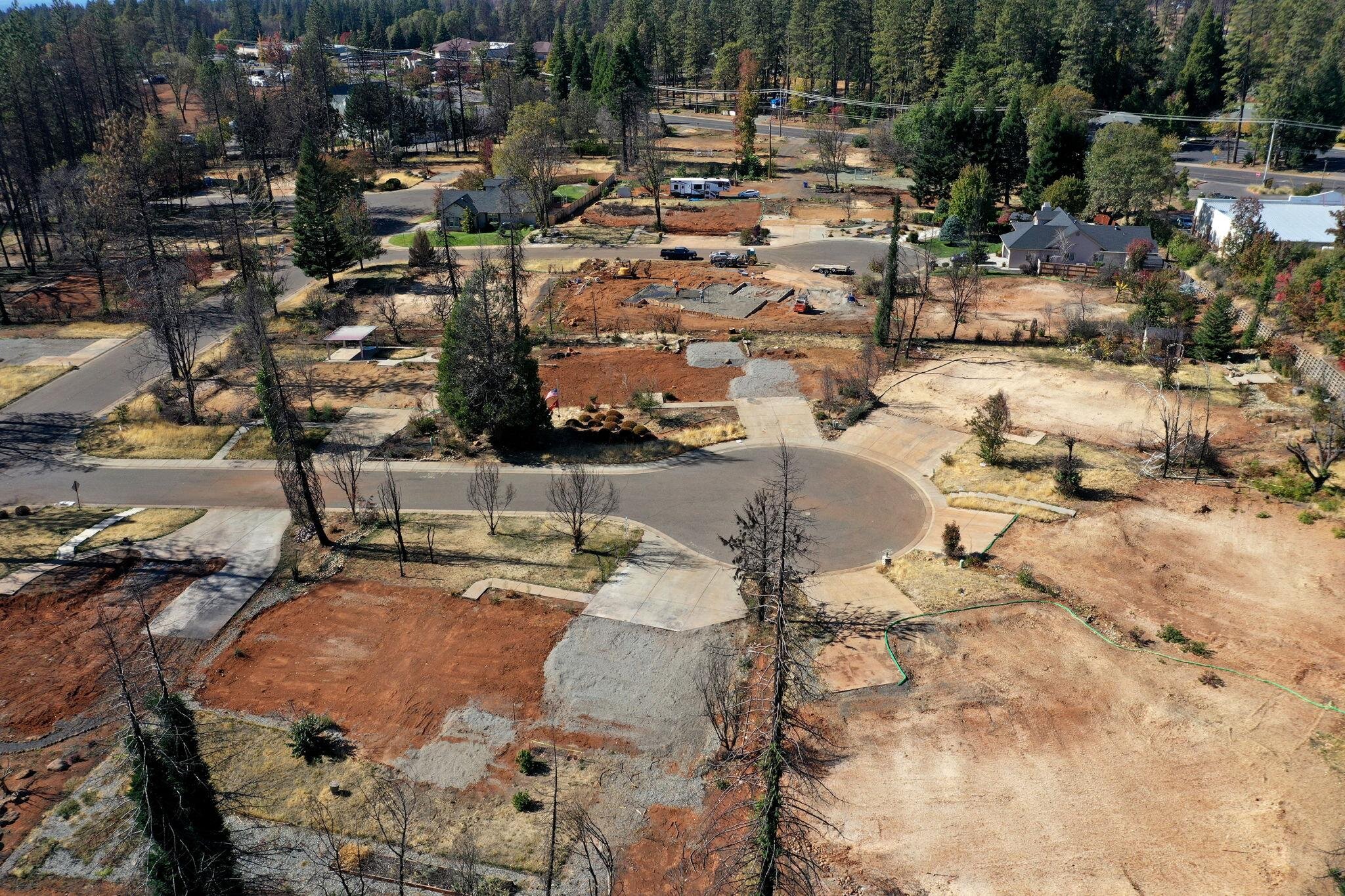
The remaining land still needs an independent evaluation. Ask whether debris removal was completed and accepted, whether existing foundations may be reused, and what documents a new building permit would require.
Verify the permitted use, setbacks, utility connections, and any easements that could restrict development. Do not advertise a parcel as ready to build merely because a home previously stood there.
For water service, the Paradise Irrigation District’s service information explains reconnecting an account and arranging service. Confirm the actual costs and availability for your address.
If debris remains, contact the town before hiring anyone to remove it. Fire debris may contain hazardous materials, and an ordinary junk removal service may not be suitable. The Contractors State License Board disaster help center is a useful resource for checking contractor qualifications.
California Disclosure Rules When Selling a Fire-Damaged Property
Selling without repairs is not the same as selling without disclosures. For covered residential transfers, California Civil Code Section 1102 and related provisions require property disclosures, including the prescribed Transfer Disclosure Statement.
Describe known fire damage, incomplete repairs, smoke contamination, water intrusion, structural concerns, and relevant notices. Provide available reports and identify conditions that have not been investigated instead of claiming that the property is free of hidden damage.
Some transfers are exempt from particular statutory forms, but exemptions do not necessarily eliminate other duties to disclose material facts.
Fire Hazard and Home Hardening Disclosures
Applicable natural hazard disclosure requirements are set out in California Civil Code Section 1103. Check the parcel using the State Fire Marshal’s Fire Hazard Severity Zone maps.
For covered homes constructed before January 1, 2010, in designated high or very high fire hazard zones, Civil Code Section 1102.6f requires additional fire-hardening disclosures. Section 1102.19 addresses related defensible space documentation for applicable transfers.
Beginning in 2026, Section 1102.6i also requires an electrical inspection advisory disclosure in covered sales, subject to statutory exceptions. This is especially pertinent when wiring may have been exposed to heat.
Have a California real estate professional or attorney determine which forms apply to your particular property, especially when selling vacant land instead of a dwelling.
Should You Repair the Fire Damage or Sell Without Rebuilding?
Restoration can make financial sense when insurance funding is sufficient, the construction scope is manageable, and you can wait for completion. A direct sale may be worth considering when you cannot fund the uninsured portion or no longer want to manage the property.
| Selling option | Main consideration |
|---|---|
| Restore, then list | Potentially higher price, but construction and financing risk |
| List in damaged condition | Wider marketing, but some buyers may struggle to obtain loans or insurance |
| Sell directly as-is | Less restoration work for the seller, usually a discounted purchase price |
Obtain comparable written bids, rather than treating a preliminary insurance estimate as the final construction budget. Include permits, engineering, clearance work, temporary protection and contingency funds. The appropriate allowance depends on how much remains unknown.
If a buyer plans to finance the purchase, ask whether the proposed loan and property insurance can accommodate the damage. A cash offer removes that particular financing dependency, not the need for inspections or legal clearances.
For an additional comparison of transaction expenses, see our agent listing versus direct sale guide.
Two Financial Examples for Paradise Property Owners
The following figures are hypothetical. They are not local market appraisals, actual insurance settlements, contractor quotations, or promised purchase offers.
Example 1: Repairing a Partially Damaged Home vs. Selling As-Is
Assume a homeowner has a damaged house that might sell for $390,000 after restoration. The mortgage payoff is $155,000. The owner has $90,000 in confirmed, unrestricted building claim funds that may be used under either option. No additional claim payment is assumed.
| Financial item | Restore and list | Sell as-is |
|---|---|---|
| Property sale price | $390,000 | $240,000 |
| Available insurance funds | $90,000 | $90,000 |
| Mortgage payoff | -$155,000 | -$155,000 |
| Restoration costs | -$145,000 | $0 |
| Agent commissions | -$19,500 | $0 |
| Seller closing costs | -$6,000 | -$3,000 |
| Holding and clearance costs | -$12,000 | -$3,000 |
| Estimated combined net | $142,500 | $169,000 |
The direct sale leaves $26,500 more under these assumptions. However, if restoration costs fall below $118,500 with all other figures unchanged, repairing becomes financially preferable. Additional insurance benefits available only after restoration could also change the outcome.
Example 2: Selling a Cleared Lot After a Total Loss
Assume a former homesite has an outstanding mortgage payoff of $95,000 before the lender applies $70,000 in held insurance proceeds to the loan. Escrow receives an updated payoff of $25,000. The owner obtains a hypothetical $65,000 land offer.
| Financial item | Amount |
|---|---|
| Lot purchase price | $65,000 |
| Updated loan payoff | -$25,000 |
| Delinquent property taxes | -$4,000 |
| Required site clearance work | -$2,500 |
| Seller closing costs | -$2,000 |
| Estimated net sale proceeds | $31,500 |
The $70,000 is not added to the seller’s cash proceeds because it has already reduced the mortgage debt. Any remaining insurance claim, replacement home purchase costs, or income tax consequences require separate analysis.
The county’s property damage reassessment information may also help owners determine whether calamity-related tax relief is available.
Prepare for a Sale Without Creating New Delays
Before opening escrow, assemble a property file with the damage photographs taken safely, fire or engineering reports, repair estimates, insurance claim correspondence, permit records, debris clearance documentation, parcel number and mortgage payoff instructions.
Request the local transfer approvals, or determine exactly what needs to happen before they can be issued. A buyer should know which costs are included in the offer and which remain your responsibility.
Ask the buyer for evidence of funds, the proposed inspection terms, and the closing conditions. Avoid agreements that leave your insurance rights or demolition obligations unclear. For a direct transaction, our home buying process explains how we evaluate properties and coordinate the sale.
Frequently Asked Questions
1. Can I sell a fire-damaged house in Paradise, CA, without repairing it?
Yes, a sale in its current condition may be possible if applicable disclosures, local transfer clearances, title and closing requirements are satisfied.
2. Can I sell my house while an insurance claim is still open?
Potentially. Confirm your remaining claim rights, lender requirements and insurance payment conditions before accepting an offer.
3. Can I keep the insurance money if I sell after a fire?
It depends on your policy, claim status, mortgage agreement and sale terms. Obtain written confirmation before treating insurance proceeds as available cash.
4. Does a fire-damaged property in Paradise need defensible space clearance?
Generally, yes. The town requires clearance for covered transfers of vacant parcels and parcels with standing homes.
5. Do I need a septic inspection to sell a damaged house in Paradise?
Standing homes generally require wastewater clearance supported by a recent septic evaluation. Ask the town whether conditional clearance is available if the system fails.
6. Can I sell a burned lot without rebuilding a house?
Yes, subject to applicable transfer requirements. Confirm debris status, site restrictions and title clearance before closing.
7. Do I have to disclose previous fire damage in California?
Known material fire damage and relevant repair history generally must be disclosed. Applicable statutory forms and other disclosure obligations depend on the transaction.
8. Will a cash buyer purchase a house with smoke damage?
Some cash buyers consider smoke-damaged homes. Offers depend on the extent of contamination, rehabilitation costs and property condition.
9. Can I sell a fire-damaged home if I still owe a mortgage?
Yes, if lender and escrow requirements can be satisfied. Insurance funds held by the lender may affect the outstanding payoff.
10. Who buys fire-damaged houses in Paradise, CA?
Local property investors, including Butte Home Buyers, may consider qualifying fire-damaged homes. Compare written offers, conditions and expected net proceeds before accepting one.
Decide Whether Rebuilding Still Makes Sense for You
You may have good reasons to rebuild in Paradise, and equally good reasons to move on. Take the time to understand the value of your claim, the remaining property obligations, and the costs of each option before committing to either path.
If you prefer to sell, visit our Paradise home buying page or request a no-obligation offer. Call Butte Home Buyers at (530) 230-3560 to discuss the condition of your property and whether a direct sale is suitable.
Disclaimer: This article provides general information, not legal, insurance, tax, construction or financial advice. Requirements vary by property, policy and loss date. Consult qualified professionals and the Town of Paradise before transferring ownership. Financial examples are hypothetical.